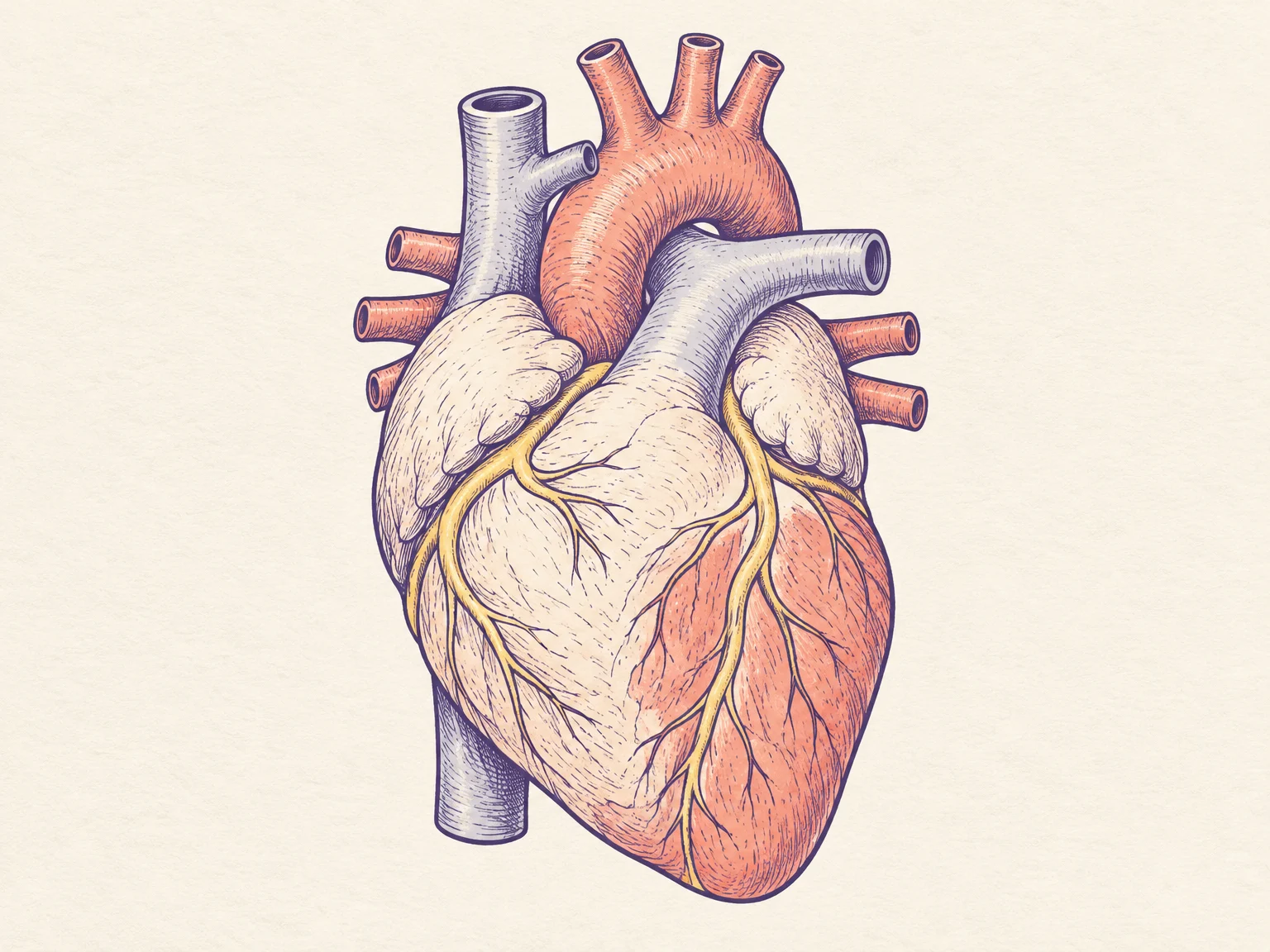
Meet your heart: a hardworking muscle that keeps blood moving through your body. Although heart-shaped art is a familiar symbol, the real organ has a more complex shape and structure.
Your heart has four chambers. The two upper chambers, called atria, receive blood. The two lower chambers, called ventricles, pump blood onward. Valves help guide blood through the heart in the right direction.
Blood returning from the body travels to the right side of the heart and then to the lungs, where it picks up oxygen. It returns to the left side, which pumps it out to the body. This repeating route is part of your circulation.
The heart’s walls are made mostly of cardiac muscle. Electrical signals help coordinate its contractions, so the chambers work in an orderly rhythm. The heart is a real organ with real anatomy; any character illustration is a playful learning aid, not a literal picture of its shape or size.
Fun fact: The familiar “lub-dub” sound comes mainly from heart valves closing as blood moves through the chambers. It is not the sound of the heart rubbing together.
Think it through: Why might it help for blood to travel from the heart to the lungs before it is pumped around the body? Write or draw your idea, then revisit the route blood takes through the heart.
Leave a Reply